How Legacy Software Modernisation Drives Growth

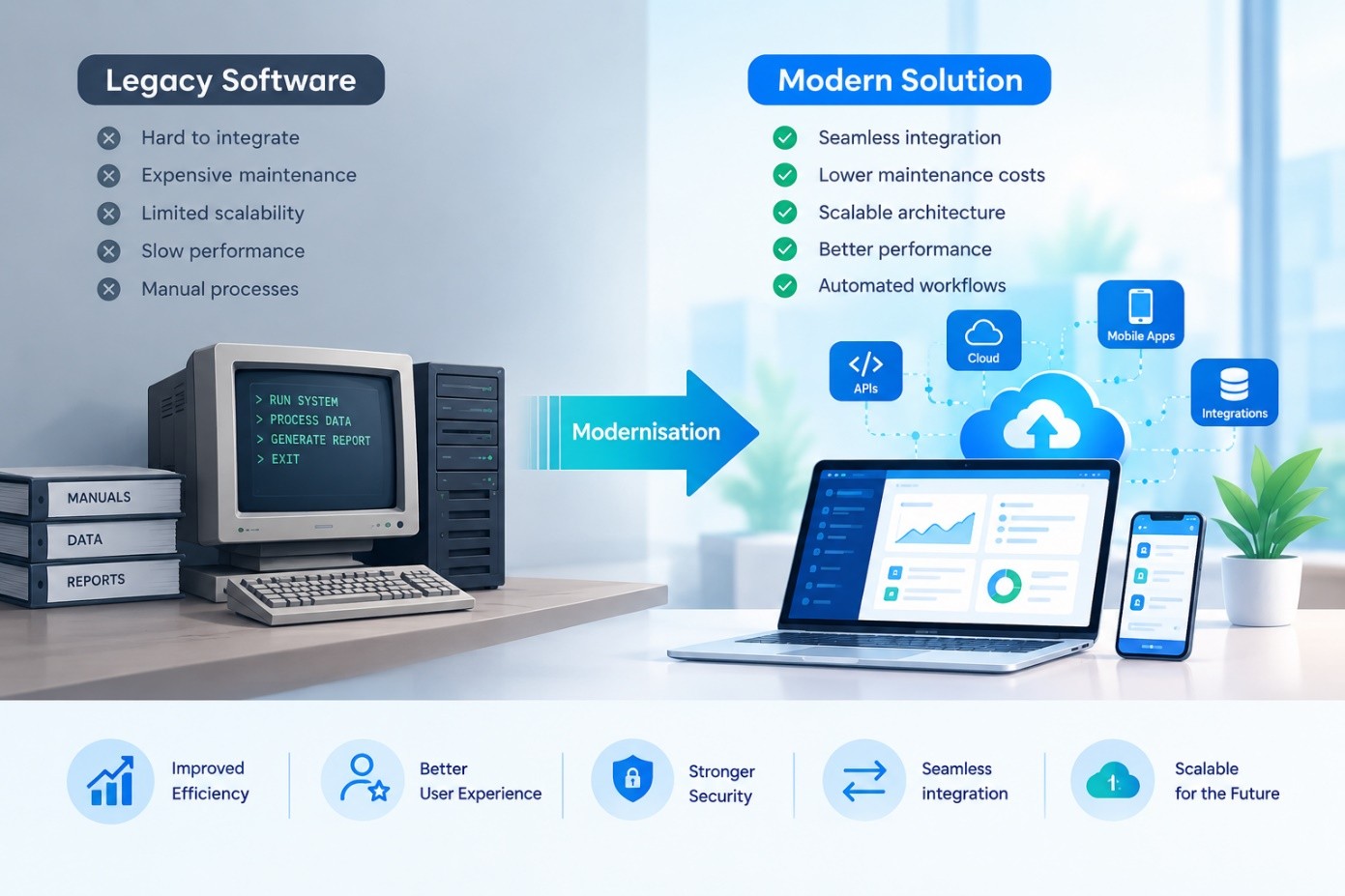
Legacy software modernization from outdated systems to modern solutionsMany organizations have to live with legacy software that was developed years ago to run critical functions. While the existing software may still carry out basic tasks, it often proves hard to extend, enhance, replace, and enhance. Software modernisation is an option that allows you to retain the benefits of your current systems.
Why Legacy Software Becomes a Problem

Outdated software can create headaches for a growing business. It’s unlikely to integrate well with more modern applications, require expensive upkeep, or be a nightmare to deploy new features. Users often need to perform tasks manually, as your systems can’t adapt to a changing environment. And this is also one of the reasons that traditional applications can be counterproductive and work against the daily business. They can also affect the company’s ability to respond to their customers’ needs and market changes.

When a Legacy System Upgrade Makes Sense

Not all legacy system upgrades have to replace your entire legacy system. You can identify the biggest pain points and improve those gradually. For instance, it could be an upgrade to an incumbent customer portal, an internal business process that is streamlined and automated, or integrating an existing application with the rest of the organization. It minimizes disruption while upgrading the technology environment.

Improving Applications for Modern Needs

Application modernization is about making your applications more relevant, flexible, and compatible with your business needs. Your applications may be rewritten and re-architected to provide a better user experience, or they may be technologically redeveloped to enhance integration with other systems. It can deliver a better user experience for both customers and staff. Smoother and faster flows of information and faster, more interactive interfaces can all create a much easier-to-use environment.

Connecting Technology Through System Migration

Sometimes companies want to migrate data or applications from their legacy environment to a newer platform. A system migration can ease the transition to better infrastructure and help preserve critical data. A migration project has to be carefully managed. The migration process should consider data quality, application compatibility, business continuity, and security.

Turning Software Transformation Into Business Value

The goal of the software transformation is not just technology of a new type. The goal is to more effectively address business issues. Newer systems may help eliminate duplication of work, streamline information flow, and make data more accessible. These enhancements can all lead to increased business efficiencies as staff can spend less time fighting with their systems and more time engaging in productive work.

Preparing for Future Growth

When it comes to a modern system, an additional feature is that expansion may well be simpler when new demands, systems, or client desires arise. Leverage a flexible foundation to deploy new digital services such as web apps, mobile apps, APIs, integrations, and more without breaking the entire tech stack.

Conclusion

Software modernization can transform an outdated legacy system into a system that enables business growth. Modernization can be as simple as upgrading a technology or as complex as replacing an old legacy application or migrating a legacy system and streamlining a company’s business processes. Brisbane-based Inventive Media is experienced in guiding organisations around Australia to deliver manageable digital solutions such as web applications, mobile applications, bespoke software, APIs, and web services. With an entire spectrum of quality, agile, communicative, and business process-driven delivery, we can help any company upgrade legacy technology to better serve their changing environment.
Inventive Media