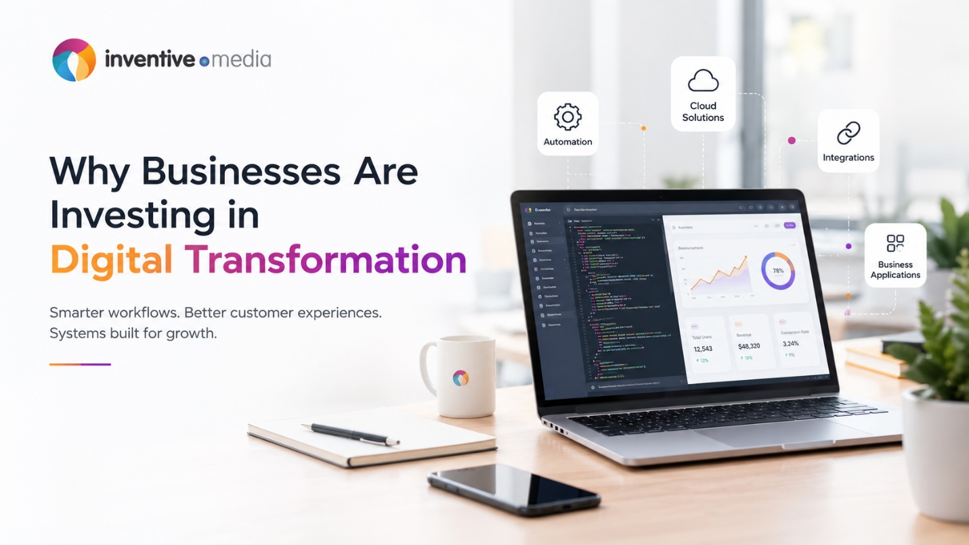
Technology has altered business functions, marketing strategies, daily working, and communications with customers. Businesses have come to rely on the transition from paper to smartphones, cloud-based applications, automation, and mobile management and are searching for viable methods to keep up with the growing pace of innovation. For this reason, you’ll find a number of businesses opting for
digital transformation services.
Improving Everyday Business Operations
The motivation for a business to undertake digital transformation includes the general simplification of work processes. Time spent on manual processes is time taken away from more important or value-adding activities. Digital can digitize information, organize work, and facilitate manual processes.
Having a clear
digital strategy enables companies to see where the technology can make the greatest impact. Rather than ‘shifting everything around’ in the hope that some of it will work, you can target key areas that impact productivity, customer satisfaction, and operational costs.
Automating Repetitive Tasks
Business automation is one of the other driving forces for digital transformation. Companies conduct mundane processes all the time like updating data, handling customer calls, reporting, scheduling, and getting internal approval for anything. Automating these processes minimizes the redundant tasks of manual labor and lets employees concentrate on high-value work.
Automation can also improve workflow. Businesses that have a specific digital system for a certain process don’t have to worry that information is going to be missed or certain tasks not completed. Businesses can also explore
AI-powered business software to automate repetitive activities and support more data-informed decisions.
Adapting to Changing Customer Expectations
More and more, customers want companies to have a seamless digital experience. They may need to use a website, a mobile app, an online portal, or any other digital vehicle.
Meeting this demand has led to increased
technology adoption industrywide. A mobile app, portal, website, or business integration can make things much quicker and easier. Those not shifting to the digital frontier may have difficulty satisfying changing demands.
Supporting Software Innovation
Digital transformation isn’t just about buying new software. It’s about a new way of approaching business problems.
Software innovation means an organization can build its own software applications, integrate other existing systems, and even build workflows around its needs. Businesses can use
custom software development to build applications around their specific workflows, integrate existing platforms, and improve operational efficiency.
Or a new software system that requires a specific app to be built, like an API for existing software platforms. The best technology can give you the flexibility you need to overcome what may seem like impossible challenges.
Building Modern Business Systems
Outdated systems can be a costly undertaking to maintain as your business expands.
Modern business systems enable your organization to develop a more unified and expandable operation. Platforms, applications, websites, databases, APIs, and intranets can connect to deliver improved information access.
If you are an organisation looking for
digital solutions Australia, this is what you want to be thinking about. You want to make sure that you’re buying technology that resolves an existing operational problem, instead of just trendy solutions. Explore how
scalable digital solutions can help businesses adapt their technology as operational needs and customer demand evolve.
Conclusion
Digital transformation enables organizations to become more efficient and effective, streamline workflows and eliminate unnecessary tasks, better address customers’ needs, and get ready for future growth. Inventive Media delivers efficient and productive technology solutions requiring less effort and cost—from web design and development, mobile apps, API and web services, and dedicated resources to digital marketing. It provides end-to-end strategies that allow companies to build better practical digital systems.