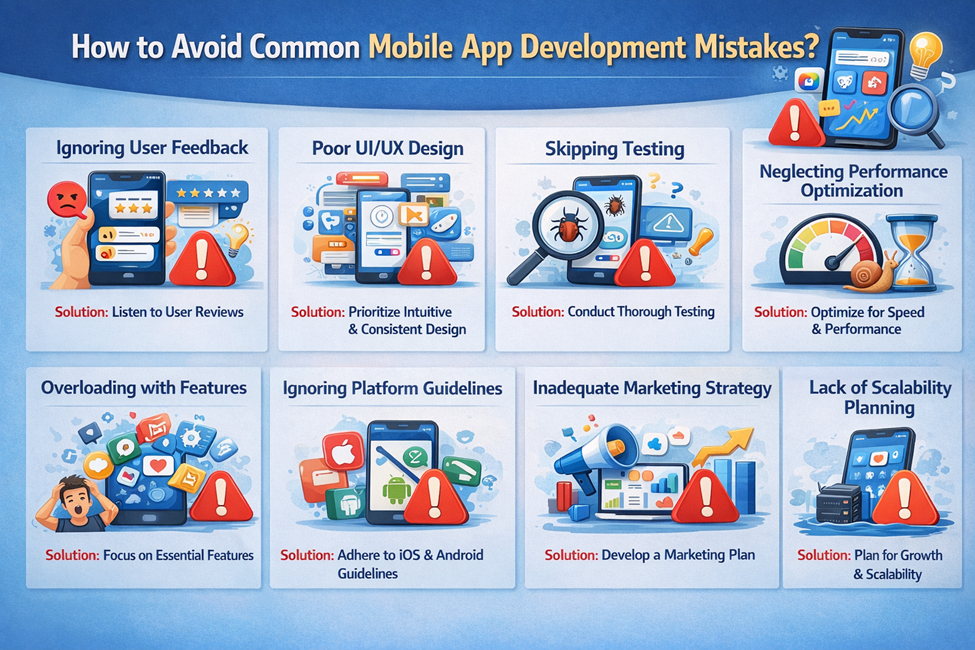
Mobile apps have been an important aspect of business-to-consumer interactions. Apps can offer convenience and enhance interaction and brand awareness by using service-oriented eCommerce sites and applications. Nevertheless, creating an effective mobile application is not simply a matter of writing code. Many companies are developing without any planning, which makes development expensive and the user experience disappointing.
Companies usually contract the services of professionals who offer
custom mobile app development service to develop a reliable and scalable application. These services are used by businesses to plan, design, and develop applications that meet user expectations and business objectives. This article will discuss common mistakes made when developing mobile apps and how to avoid them in practice.
1. Starting Development Without Proper Research
The most common error that businesses commit is getting into development without knowing the market. A large number of apps fail due to a lack of a real issue or the existence of a superior solution to the issue.
Market research and competitor analysis should be conducted before development begins. This involves getting to know the user’s needs, researching available apps, and understanding the value your application will provide.
Engaging a professional
mobile app development company can assist at this stage, as senior teams conduct thorough market research before initiating development. This gives the end product a sense of purpose and a competitive advantage.
2. Ignoring User Experience UX Design
A mobile application can be equipped with very strong features, but if it is not easy to use, it will be abandoned within a short period of time. Poor navigation, confusing interfaces, and slowness can spoil the user experience.
That is why the design of UI and UX must be in the set of priorities of the development process. Companies are to concentrate on developing an easy-to-use, intuitive interface.
Mobile app design companies also offer the
best mobile app design services specialise in creating easy-to-use layouts, intuitive navigation, and stylish user interfaces. This will guarantee users a pleasurable experience when using the app, enhancing engagement and retention.
3. Lack of a Clear Development Strategy
The other pitfall is a lack of a clear development roadmap. Projects without good planning usually experience delays, budget overruns, and uneven features.
A clear development strategy should include:
- App goals and objectives
- Feature prioritization
- Development timeline
- Budget planning
- Technology selection
The companies that invest in
custom mobile app development services benefit from organised planning procedures that guide the project concept through to launch. This systemised process minimises risks and enables the application to be developed effectively.
4. Choosing the Wrong Technology Stack
The stack of technologies used in mobile app development directly influences performance, scalability, and security. Using outdated or inappropriate technologies may lead to issues in the future when the app has to be upgraded or integrated.
As an example, some businesses choose frameworks that cannot handle more traffic or more complex features. This results in performance and increased redevelopment expenses.
An established mobile applications development firm assists the business in choosing the appropriate technologies based on the project and user expectations, as well as long-term scalability.
5. Neglecting App Performance Optimisation.
Users want the mobile apps to load quickly and work well. Users can uninstall the application almost instantly if it crashes frequently or is very slow.
Performance optimisation includes:
- Efficient coding practices
- Optimised images and data loading
- Proper database management
- Testing under different network conditions
This is an omission in the development process of many businesses. Nevertheless, performance testing is regularly conducted by experienced developers and agencies that provide the best mobile app design services throughout the development process.
6. Skipping Testing and Quality Assurance
Testing is a very important aspect of developing a mobile app, but some businesses do not take the time to test before releasing their apps. This may cause bugs, crashes or compatibility problems with other devices.
A proper testing strategy should include:
- Functional testing
- Performance testing
- Security testing
- Device compatibility testing
- User acceptance testing
The process a professional
Mobile App development agency Brisbane follows is typically systematic to ensure the application is compatible with various platforms and devices
7. Not Planning for Scalability
Most applications begin with a limited number of users, only to expand quickly if the idea is successful. Unless scalability is addressed initially, the application may experience difficulties with high traffic or large data loads.
Scalable architecture. The architecture is designed to allow the app to scale with growth without impacting performance. These are cloud integration, pliable databases and modular development frameworks.
The solutions offered to businesses with seasoned developers and Mobile App development agency Brisbane teams usually have a long-term growth focus.
8. Ignoring Security Measures
Security is among the most important issues in mobile application development, particularly for applications that handle personal or financial information. Security practices may result in data loss, legal consequences, and loss of user confidence.
Key security measures include:
- Secure authentication systems
- Data encryption
- Secure APIs
- Regular security testing
Throughout their development phases, professional development teams are more concerned with security to ensure the app is safe and reliable for users.
9. Overloading the App With Too Many Features
Most of the businesses attempt to bring on board too many features in the initial version of their application. This tends to result in complicated interfaces, extended development timelines, nd increased costs
Rather, they ought to dedicate their energies to creating a Minimum Viable Product MVP. MVP contains only the core features necessary to solve the problem.
After the app’s launch and the receipt of feedback, additional features can be introduced over time. This is a risk-minimising strategy that enhances product-market fit.
Conclusion
Professional development support from businesses is better positioned to create scalable, easy-to-use applications. By collaborating with the professionals who provide custom mobile app development services and with trained teams at a mobile app development company, you can determine whether the application is both technically and business-wise focused.
When developing a mobile application, it is worth enlisting the services of the right experts to avoid costly mistakes. Inventive Media provides business development, innovative design, and scalable solutions that meet your needs.
Today, the relationship with Inventive Media can be established to learn about credible mobile app solutions and move forward with creating a prosperous digital product.